

Why the Grinder Stays on the Shelf
A grinder is designed to reduce dry flower into loose, fairly uniform pieces. A moon rock behaves differently: its concentrate coating can gum the teeth while the mechanical action strips kief from the surface. The result is harder to remove from the grinder and no longer preserves the intended three-layer construction.
Use clean fingers for a piece that separates without much pressure. If the coating pulls or the center resists, small scissors offer more control. Work over a clean tray or the bowl itself so loose kief remains with the material instead of being left on a table.

Separate One Small Piece
The supplied handling guidance starts with a piece around the size of a pencil eraser. That is a preparation reference, not a universal serving promise. Infused cannabis can vary by flower, concentrate, kief, batch, and how evenly those layers are distributed, so the package remains the source for the specific product.
Keep the separated piece compact enough to preserve its layers but open enough at the edges to catch heat. Avoid compressing it into a hard plug. If additional material is used, add it in separate steps rather than turning the bowl into one dense mass with no air path.
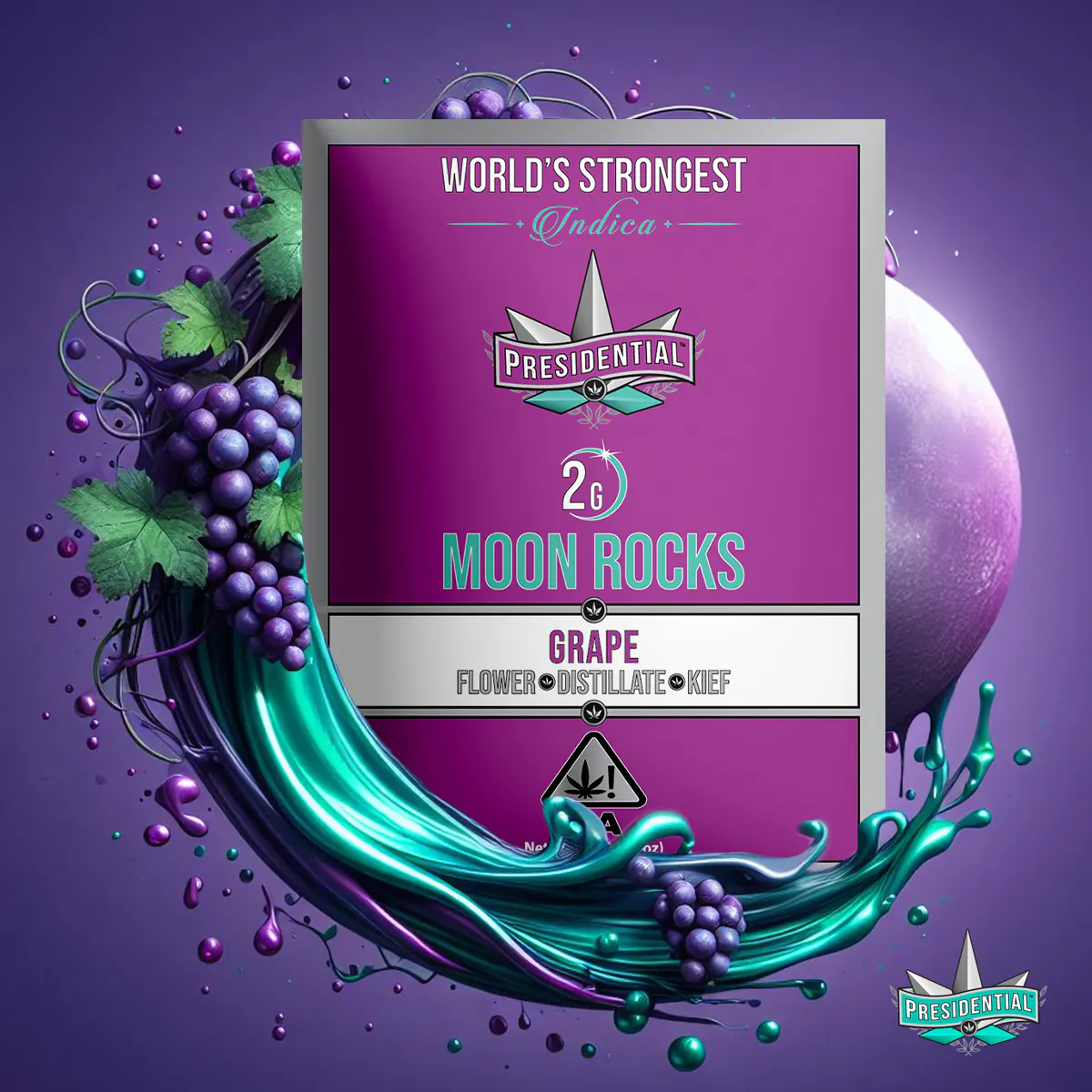
Use Glass for Easier Control
A bowl makes the moon rock visible while it is being prepared and lit. It also keeps the dense piece supported when the concentrate softens. Paper can work, but the material is sticky, heavy, and less uniform than ground flower, which makes distribution and airflow harder to control inside a roll.
For a paper format, use the layering method: spread ground flower, place small moon-rock pieces along the center, then cover them with another light layer of flower. The surrounding flower helps carry the burn rather than asking one concentrate-rich line to stay lit by itself.
Build an Air Path
Airflow matters because the concentrate changes the density of the material. In a bowl, do not pack the opening so tightly that air cannot pass around the infused piece. A loose bed of ground flower below and a light cover above can support the piece while leaving small channels for air.
The same principle applies in paper. Large, uneven chunks create dense spots that heat and burn at different rates from the surrounding flower. Smaller separated pieces, distributed along the roll, reduce that contrast without grinding away the kief coat.
Bring the Flame in Slowly
Use a patient flame and aim for an even start rather than holding intense heat on one point. The outer kief catches first, while the concentrate beneath it warms and the flower core begins to burn. Moving too quickly can light the surface without establishing the center.
A moon rock may go out and need to be lit again. That does not automatically identify a defect; the format is denser than loose flower and its three materials do not burn at identical rates. Relight the unburned edge and keep the air path open instead of repeatedly heating one charred spot.
Keep the Remaining Material Clean
Handle only the amount being prepared. Return the rest to cool, dark storage promptly because heat and light take the volatile terpenes first. Keep stray ash, used tools, and loose debris away from the stored product, and close its container securely after each use.
The whole method can be remembered in six moves: skip the grinder, separate a small piece, choose a controllable setup, layer when useful, leave airflow, and light slowly. Those steps respect the moon rock's construction instead of trying to make it behave exactly like ordinary ground flower.
If the first light is uneven, pause and look at the material before changing the setup. A blocked air path, one oversized piece, or a surface-only light each calls for a different correction. Observation keeps a routine adjustment from becoming repeated heat applied without a clear purpose.