
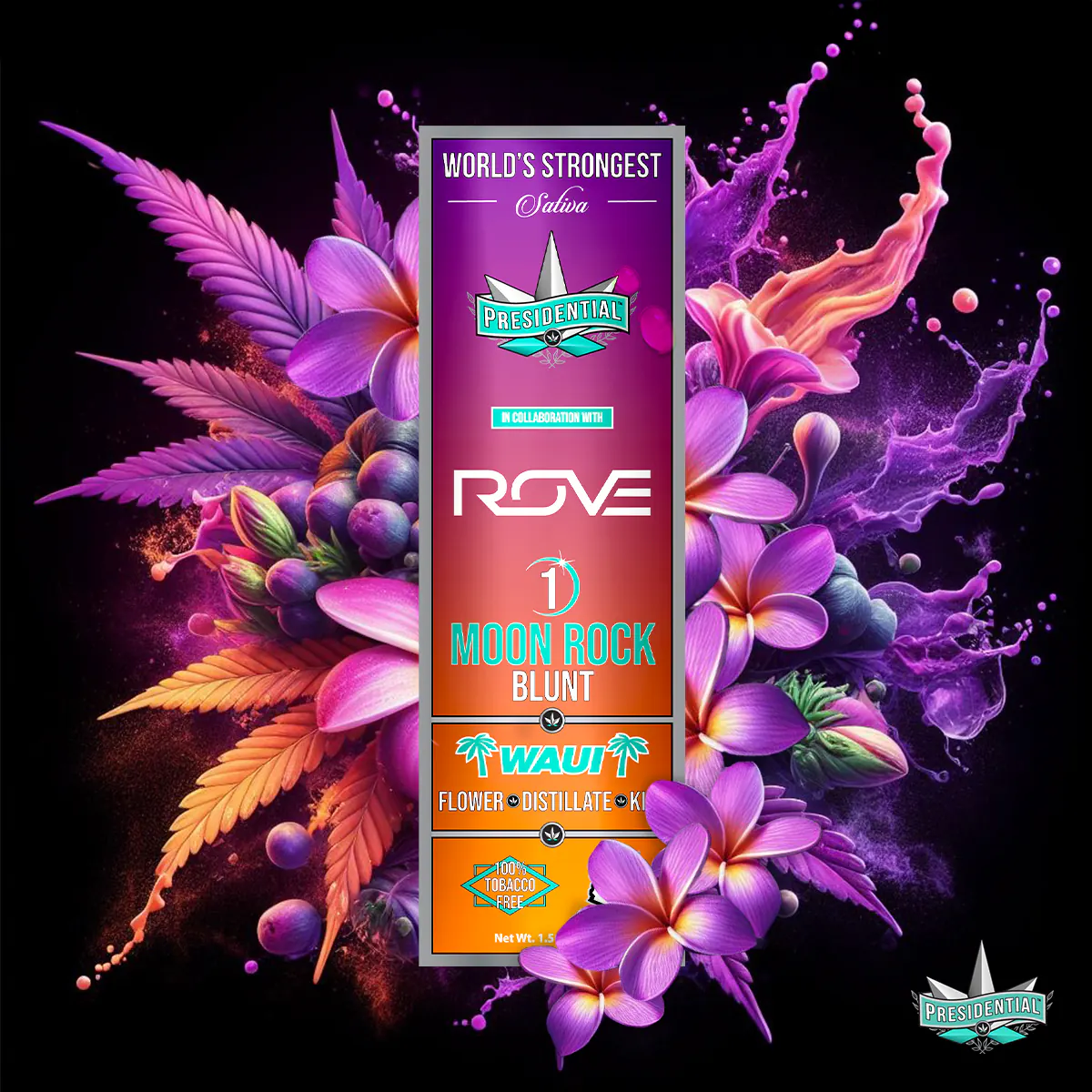
Control Heat, Light, and Time
Heat can soften concentrate, alter how a coating sits on flower, and speed the loss of volatile aroma compounds. Light adds another source of exposure, while time allows small changes to accumulate. A consistently cool, dark location addresses the first two and makes the third easier to manage.
Consistency matters more than inventing a complicated ritual. Choose one suitable storage location, return the product there after handling, and avoid places that regularly heat up or sit in direct light. The goal is a stable environment, not frequent movement between extremes.

Choose a Container That Fits the Format
A useful container closes securely, stays clean, and gives the product enough room to be removed without scraping away its surface. Moon rocks need space for the kief coat; pre-rolls and minis need support that does not bend the paper; a cartridge should remain protected from debris and impact.
An opaque container adds protection from light. If the container is clear, the storage location itself must provide darkness. Oversized containers leave material moving around, while an overly tight container can press or smear a concentrate coating, so fit is part of the decision.

Keep Formats and Batches Separate
Do not combine unrelated infused products just to save space. Flower coated with concentrate and kief has different handling needs from a wrapped pre-roll, blunt, mini, or sealed cartridge. Separation also keeps each package's identity and handling instructions connected to the correct item.
The same principle helps with batches. If two packages carry different descriptions or numbers, preserve that distinction rather than mixing their contents. A later inspection is more useful when the product can still be matched to the information it arrived with.
Reduce Handling and Open Time
Plan the handling step before opening the container. Set out the clean tool or surface, remove only what is needed, and close the remaining product again. For moon rocks, use fingers or scissors instead of a grinder so the concentrate does not gum the teeth and the kief stays with the piece.
Repeated touching transfers material away from the product and onto hands or tools. It also gives heat and room light more opportunities to reach the exposed surface. A short, deliberate routine protects both the construction and the cleanliness of the stored portion.
Notice Changes Without Guessing
Use observable comparisons: is the aroma less distinct than when the package was opened, has the concentrate shifted or softened, has the kief coat rubbed away, or has a paper format bent or loosened? Those details describe product condition without making claims about personal effects.
A single visual change does not explain its own cause. Warm storage, bright exposure, repeated handling, or simply time may contribute. Record what you can see and smell, compare it with the package description, and avoid treating an uncertain change as proof of one specific problem.
Use a Repeatable Storage Routine
A reliable routine is short: verify the label, keep the product in a fitting container, store it cool and dark, open it only when needed, use clean handling, inspect it, and close it again. That sequence works across infused flower and wrapped formats while respecting their physical differences.
Keep the original package information with the product and follow any instructions printed there. General storage principles provide a baseline, but the specific format, container, and batch information remain relevant. When availability or replacement is the question, use the brand's official licensed-retailer path rather than treating this reference site as a store.
Review the location whenever the season or room conditions change. A place that stays cool and dark at one time may receive direct light or more heat at another. Moving the closed container to a more stable spot is a storage correction; repeatedly opening it to check conditions is not.
The container also needs to remain identifiable. Preserve the printed package or keep it directly with the inner container, especially when more than one infused format is stored. That small organizational step protects the connection among the material, its description, its batch, and its directions.