
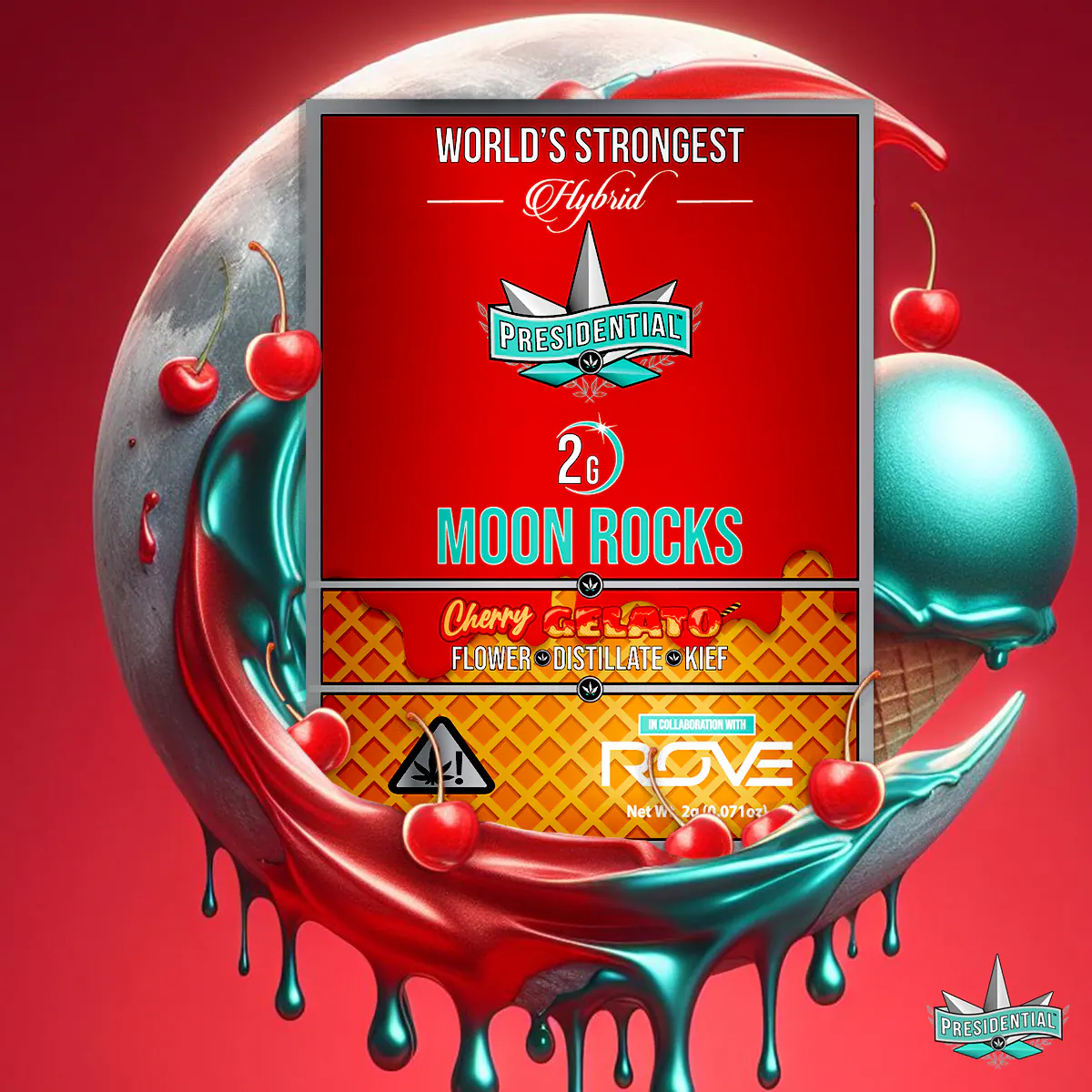
The three-layer construction
The center is a cured flower bud. Its cannabinoid profile belongs to the tested batch, not to a universal category range. A producer then applies cannabis concentrate around or into that flower, so both the amount and distribution of that input matter to the final composition.
Kief goes on last. Kief is a collection of trichomes, the resin glands that hold much of the plant’s cannabinoid and terpene content. It clings to the concentrate and leaves the recognizable granular surface. Each layer has a separate physical job: flower supplies structure, concentrate bonds and infuses, and kief completes the outer layer.
Why a moon rock looks and feels dense
An intact moon rock may hide most of its flower beneath the kief coat. Small green or brown areas can remain visible, but a consistent exterior should look deliberately covered rather than accidentally dusted. Inside, the concentrate occupies space among the flower’s folds and adds mass without increasing the piece’s dimensions very much. That is why a moon rock can feel unexpectedly heavy for its size.
Texture varies with the concentrate, room temperature, and storage. A warmer piece may feel softer because the coating has become more mobile. A cool piece may feel firmer. Neither texture alone proves quality or potency; those judgments require the label, batch information, and a look at how evenly the layers were assembled.

Potency is a weighted blend
A finished moon rock is a weighted blend of all three layers: how much flower is present, the tested composition and amount of the coating, and what the kief contributes. A category name does not establish a finished percentage.
A percentage printed for one concentrate ingredient cannot be transferred directly to the finished piece. Flower and kief still contribute to the total weight and composition, so the finished package’s cannabinoid statement and associated batch record are more useful than estimating from appearance.
California origins and the caviar distinction
The modern format emerged in California during the 2010s and was popularized by Kurupt’s Moonrock brand. Girl Scout Cookies became the strain most closely associated with early versions. Since then, producers have varied the center flower, concentrate type, kief, and the method used to distribute the infusion.
Cannabis caviar and moon rocks are related but not interchangeable terms. Caviar is flower coated in oil. A moon rock adds the outer kief layer, making the three-part assembly its defining feature. A product with no kief coat may still be infused flower, but it does not match the full layered definition used here.
How to handle the layered surface
Do not put a moon rock in a grinder. The concentrate can gum the teeth while the grinding action strips kief from the surface and leaves valuable material inside the grinder. Break off a small piece by hand or use clean scissors. A piece around the size of a pencil eraser is a practical starting unit for handling the dense material.
The layers retain heat and do not behave like evenly ground flower. Place small pieces between ground flower in a bowl or roll so air can move around them. Apply the flame patiently and expect a relight. These are construction responses, not potency promises: smaller pieces and supporting flower simply expose more edges and create a more continuous burn path.
Storage and a useful quality check
Store moon rocks in a closed container in a cool, dark place. Heat and light take the volatile terpenes first and can soften the concentrate enough to shift the outer coat. Avoid pressing pieces together, because contact can flatten the kief and make separate pieces adhere.
Before opening, read the product identity, net contents, ingredients, batch or lot number, package date where provided, and cannabinoid labeling. After opening, look for a coherent flower core, an intentional concentrate layer, and a kief coat that belongs to the piece rather than a loose pile at the bottom. Those observations describe construction; the batch label remains the evidence for composition.